Key Takeaways
- Authentication factors are the distinct types of evidence used to verify identity before granting access to systems, applications, or data.
- There are five main categories: something you know, something you have, something you are, somewhere you are, and something you do.
- MFA adoption is linked to a 50% reduction in successful breaches, yet 61% of organizations still have at least one root account without MFA enabled (Orca Security, 2024).
- Traditional authentication models were built for human users. The explosive growth of non-human identities (NHIs) and AI agents has created a new class of authentication challenges that most tools are not equipped to handle.
- Entro Security extends authentication security beyond human accounts to cover the full lifecycle of NHIs, secrets, and agentic AI across the enterprise.
What is Authentication Factors
Authentication factors are the different elements used to verify a user’s identity before granting access to a system, application, or data. These factors go beyond simple passwords, aiming to provide a layered approach to security. By requiring multiple independent pieces of evidence, the risk of unauthorized access is significantly reduced, even if one factor is compromised. This robust process makes it substantially harder for attackers to impersonate legitimate users.
Synonyms
- Multi-Factor Authentication (MFA)
- Two-Factor Authentication (2FA)
- Strong Authentication
- Layered Security
- Identity Verification
The Five Types of Authentication Factors
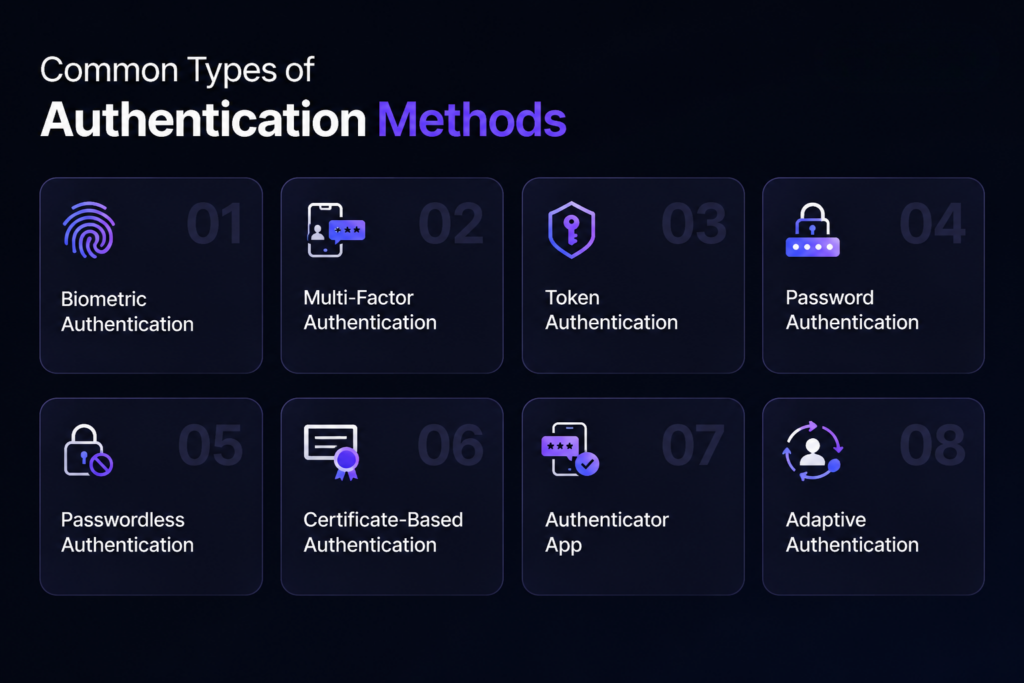
Authentication factors fall into five distinct categories, each drawing on a different property of the authenticating party.
| Factor Type | What It Relies On | Common Examples | Primary Weakness |
|---|---|---|---|
| Knowledge | Something you know | Password, PIN, security question | Phishing, brute force, credential reuse |
| Possession | Something you have | Hardware token, OTP app, smart card | Loss, theft, malware on device |
| Inherence | Something you are | Fingerprint, face ID, iris scan | Biometric spoofing, privacy concerns |
| Location | Somewhere you are | GPS, IP address, cell network | Location spoofing, VPN bypass |
| Behavioral | Something you do | Typing rhythm, mouse movement, gait | Requires data collection, patterns shift over time |
Knowledge Factors
Knowledge factors are the most familiar form of authentication. A password, PIN, or passphrase falls into this category. They are also the most vulnerable, because information can be guessed, stolen via phishing, or exposed in a data breach. Strong password policies and user education remain essential when knowledge factors are part of the authentication chain.
Possession Factors
Possession factors require the user to physically hold something: a hardware token, a smartphone running an authenticator app, or a FIDO2 security key. Because an attacker needs physical access to the device, possession factors are generally more secure than passwords alone. The risk lies in loss, theft, or device compromise through malware.
Inherence Factors
Inherence factors rely on unique biological traits. Fingerprint readers, facial recognition, voice authentication, and iris scanners are all inherence-based mechanisms. These are difficult to replicate and carry a strong user experience because there is nothing to remember or carry. The tradeoffs involve privacy implications and the fact that biometric data, once compromised, cannot be reset.
Location Factors
Location-based authentication uses GPS coordinates, IP address ranges, or cellular network data to verify that a login attempt originates from an expected place. It is most often used as a secondary signal rather than a primary factor. It can restrict access from unexpected geographies or trigger step-up authentication when anomalous locations appear.
Behavioral Factors
Behavioral biometrics analyze the way a user interacts with a device: keystroke dynamics, mouse trajectory, scroll patterns, or even walking gait when on a mobile device. These methods are passive, meaning they do not require any deliberate action from the user, and are increasingly powered by machine learning to improve accuracy over time.
Why are Authentication Factors Important
In an age of frequent data breaches and sophisticated cyberattacks, relying on single-factor authentication is no longer sufficient. Attackers are constantly developing new techniques to bypass traditional security measures. Compromised credentials, weak passwords, and phishing scams are common entry points for malicious actors. Authentication factors provide a critical additional layer of defense.
By implementing authentication factors, organizations can:
- Reduce the risk of unauthorized access: Making it significantly harder for attackers to gain access to sensitive data and systems, even if they have obtained a user’s password.
- Comply with regulatory requirements: Many regulations, such as GDPR and HIPAA, require organizations to implement strong authentication measures to protect personal data.
- Protect sensitive data: Preventing unauthorized access to confidential information, financial records, and other sensitive data.
- Enhance user trust: Demonstrating a commitment to security and protecting user data, which can improve customer confidence and loyalty.
- Mitigate the impact of data breaches: Reducing the potential damage caused by a data breach by limiting the attacker’s access to systems and data.
- Improve overall security posture: Strengthening the organization’s overall security defenses and reducing its vulnerability to cyberattacks.
Authentication Factors and Compliance
Organizations operating in regulated industries face mandatory authentication requirements under several frameworks:
| Regulation | Scope | Authentication Requirement |
|---|---|---|
| GDPR | EU personal data processing | “Appropriate technical measures” including strong authentication |
| HIPAA | US healthcare data | Access controls and audit controls for ePHI systems |
| PCI DSS | Payment card data | MFA required for all non-console admin access and remote access |
| SOX | US public company financials | Strong internal controls over financial systems |
Failure to comply with these regulations can result in significant fines and reputational damage. Beyond compliance, a strong authentication posture is increasingly a baseline expectation for enterprise customers and cyber insurance underwriters.
Benefits of Authentication Factors
The benefits of implementing authentication factors extend beyond simply improving security. They also offer several other advantages:
- Enhanced Security: The most obvious benefit is the significantly increased security provided by requiring multiple forms of verification. This makes it much more difficult for attackers to gain unauthorized access.
- Reduced Risk of Data Breaches: By mitigating the risk of unauthorized access, authentication factors help to reduce the likelihood of costly and damaging data breaches.
- Improved Compliance: Many industries and regulations require the use of authentication factors to protect sensitive data. Implementing these measures helps organizations comply with these requirements.
- Increased User Confidence: Users feel more secure knowing that their accounts and data are protected by multiple layers of security.
- Simplified Access Management: Authentication factors can be integrated with access management systems to streamline the process of granting and revoking access to resources.
- Cost Savings: While there may be some initial costs associated with implementing authentication factors, the long-term cost savings from preventing data breaches can be substantial.
Challenges With Authentication Factors
While authentication factors offer significant security benefits, there are also some challenges associated with their implementation and use:
- User Experience: Implementing authentication factors can sometimes add friction to the user experience, making it more time-consuming and complicated to log in. This can lead to user frustration and resistance.
- Cost: Implementing and maintaining authentication factors can incur costs, particularly for hardware tokens and biometric scanners.
- Complexity: Integrating authentication factors into existing systems can be complex and require significant technical expertise.
- Scalability: Scaling authentication factors to support a large number of users can be challenging, particularly for organizations with a distributed workforce.
- Reliability: Authentication factors must be reliable and available to ensure that users can access the system when needed. Outages or failures can disrupt business operations.
- Security of the Factors Themselves: It’s crucial to ensure the security of the authentication factors themselves. If a hardware token is compromised, or biometric data is stolen, the entire system can be compromised.
Implementing Authentication Factors
Successful implementation of authentication factors requires careful planning and execution. Here are some key considerations:
- Choose the right factors: Select authentication factors that are appropriate for the level of security required and the user experience goals. Consider the risk profile of the system and the sensitivity of the data being protected.
- Implement strong policies: Enforce strong password policies and educate users about the importance of security. User awareness plays a crucial role in preventing phishing and social engineering attacks.
- Provide user training: Train users on how to use authentication factors properly and what to do if they encounter problems.
- Monitor and maintain the system: Regularly monitor the system for security breaches and update the authentication factors as needed.
- Integrate with existing systems: Integrate authentication factors with existing access management systems to streamline the process of granting and revoking access.
- Consider the user experience: Strive to minimize the impact on the user experience by providing a seamless and intuitive authentication process.
How Authentication Factors Apply to Entro
Modern enterprises do not authenticate only humans. Every API integration, cloud service connection, CI/CD pipeline, and AI agent authenticates using credentials: API keys, OAuth tokens, service account passwords, certificates, and other secrets. These non-human identities (NHIs) vastly outnumber human accounts in most organizations, with some environments running ratios of 45 NHIs for every human user.
The challenge is that NHIs typically cannot participate in standard MFA flows. They authenticate using static secrets or tokens, often with no rotation cadence, no ownership record, and no monitoring for anomalous behavior. When a compromised NHI credential is used in an attack, there is frequently no second factor to stop it.
This gap has grown sharper with the rise of agentic AI. AI agents operate autonomously, invoke APIs, access cloud resources, and make decisions without continuous human oversight. Each agent requires credentials. Those credentials need to be issued, tracked, rotated, and retired. Without a systematic approach, agentic AI environments quickly accumulate a sprawl of unmanaged, over-privileged identities.
Entro Security addresses this directly. The platform provides full discovery and inventory of all NHIs and their associated secrets across cloud environments, SaaS platforms, and on-premises systems. Entro applies context to each identity, including ownership attribution, permission scope, usage patterns, and risk posture, so security teams can understand not just what exists, but what is exposed.
For authentication enforcement, Entro integrates with vault systems and secret managers to enforce rotation policies, flag stale or over-privileged credentials, and detect anomalous usage through NHIDR (Non-Human Identity Detection and Response). When an AI agent or service account authenticates in an unexpected pattern, Entro surfaces the alert in real time.
Watch: How AI Agents Impact NHIs & The Attack Surface
Implementing Authentication Factors: Best Practices
- Match factor strength to risk. High-privilege access to production systems warrants phishing-resistant MFA (FIDO2/WebAuthn). Lower-risk internal tools may tolerate TOTP apps.
- Prioritize phishing-resistant methods. SMS-based OTPs are vulnerable to SIM swapping and AiTM attacks. Hardware security keys and passkeys eliminate this risk class entirely.
- Extend authentication thinking to NHIs. Every service account, API key, and machine credential is an authentication factor in reverse. Treat them with the same rigor as human credentials.
- Enforce rotation. Static credentials that never rotate are a persistent liability. Automated rotation policies reduce the blast radius of any single exposure.
- Monitor for anomalies. Authentication factors prevent unauthorized access at login. Behavioral monitoring detects misuse of credentials that were legitimately obtained.
- Plan for failure. Users lose devices, tokens expire, and biometric scanners fail. Recovery pathways must be secure and auditable, not a backdoor that bypasses every control.
Authentication Factors Future Trends
The authentication landscape is shifting quickly. Several trends are shaping where the field is heading:
Passwordless authentication is moving from aspiration to mainstream. Google has announced mandatory MFA rollout across all Google Cloud users, and passkey adoption across consumer platforms is accelerating. Replacing passwords with cryptographic credentials tied to devices eliminates an entire class of phishing attacks.
Adaptive and risk-based authentication adjusts authentication requirements dynamically based on context. A user logging in from a known device at a normal time may face minimal friction. The same user logging in from an unfamiliar country at 3 AM triggers step-up authentication automatically.
AI-powered threat detection sits alongside authentication factors rather than replacing them. Machine learning models analyze authentication telemetry to detect patterns that rule-based systems miss, including subtle indicators of account takeover in progress.
Decentralized identity frameworks, built on cryptographic standards, give users portable, verifiable credentials that do not depend on any single identity provider. These are still emerging but represent a significant architectural shift for high-assurance use cases.
People Also Ask
Q1: What is the difference between 2FA and MFA?
2FA (Two-Factor Authentication) specifically uses two authentication factors, while MFA (Multi-Factor Authentication) uses two or more. Therefore, 2FA is a subset of MFA. Any authentication process that utilizes at least two distinct factors can be considered MFA. The goal of both is to provide a stronger level of security compared to relying solely on a single password.
Which authentication factor is the most secure?
There is no single answer, because security depends on implementation quality and threat model. Phishing-resistant factors tied to hardware, such as FIDO2 security keys, are generally considered the strongest for protecting human accounts. For non-human identities, the equivalent is short-lived, automatically rotated credentials with strong access controls and anomaly monitoring.
Can authentication factors be bypassed?
Yes, and attackers actively develop techniques to do so. AiTM attacks intercept authentication sessions in real time. MFA fatigue attacks flood users with push notifications until they approve one. SIM swapping redirects SMS codes to an attacker-controlled device. Phishing-resistant methods like FIDO2 are specifically designed to close these gaps.
How do authentication factors apply to non-human identities?
NHIs, including service accounts, API keys, machine tokens, and AI agents, cannot use interactive MFA. Their “authentication factors” are the credentials they carry. Securing NHIs requires systematic issuance, least-privilege scoping, regular rotation, ownership tracking, and behavioral monitoring to detect misuse.
What is adaptive authentication?
Adaptive authentication adjusts the required authentication factors in real time based on signals such as location, device posture, time of access, and behavioral patterns. It applies stronger verification when risk signals are elevated and reduces friction when the context is familiar and trusted.
What regulations require MFA?
PCI DSS requires MFA for all non-console administrative access and all remote access. HIPAA requires access controls for electronic protected health information. GDPR calls for appropriate technical measures for personal data, which regulators increasingly interpret to include strong authentication. SOX requires strong internal controls over financial systems.
How does passwordless authentication work?
Passwordless authentication replaces passwords with cryptographic credentials tied to a device or biometric. When a user authenticates, a private key stored on the device signs a challenge from the server. The server verifies the signature using the corresponding public key. Because the private key never leaves the device, phishing, credential stuffing, and database breaches targeting passwords have no impact.
Related reading: How Phishing Targets NHIs | Harnessing AI in Identity and Access Management | Authenticating AI Agents – A Practical Guide for Security Architects & CISOs