Key takeaways
- Human identity refers to the unique set of attributes, credentials, and roles that define a person’s digital presence and govern their access to systems and data.
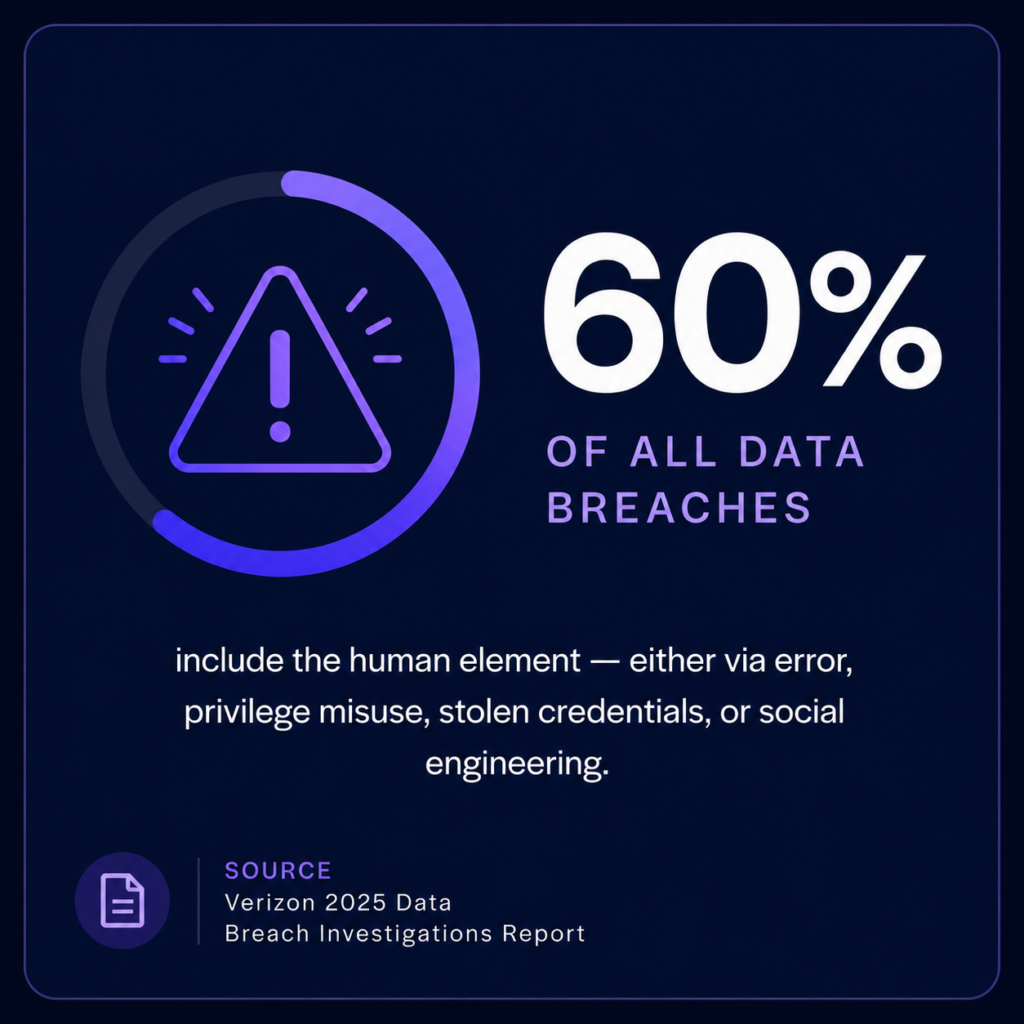
- Identity-based attacks are now the leading cause of data breaches, with the human element involved in 60% of all breaches (IBM, 2025).
- Managing human identity effectively requires multi-factor authentication, least-privilege access, and continuous lifecycle governance.
- As AI agents and non-human identities (NHIs) multiply, human identity management can no longer be treated in isolation. It must be part of a unified identity security strategy.
- Entro Security extends identity governance to human identities while simultaneously securing AI agents and NHIs across the enterprise.
What is Human Identity
Human Identity encompasses the unique set of characteristics, attributes, and affiliations that define an individual in both the physical and digital realms. It’s the sum of verifiable data, behaviors, and relationships that distinguish one person from another. In the context of cybersecurity and data management, Human Identity becomes a critical component of access control, authentication, and authorization processes. Ensuring the integrity and security of Human Identities is paramount to protecting sensitive data and preventing unauthorized access to systems and resources. As we become increasingly reliant on digital interactions, understanding and managing Human Identity effectively becomes ever more vital.
Synonyms
- Digital Identity
- Personhood
- Individual Profile
- User Account
- Identity Record
Why human identity security matters right now
The numbers make the urgency clear.
- 60% of all breaches involve the human element, through stolen credentials, privilege misuse, social engineering, or insider error (Verizon Report, 2025).
- Identity-based threats account for more than three-quarters of breaches, yet most organizations are still struggling to reach IAM maturity due to manual processes and underinvestment (Ponemon Institute / GuidePoint Security, 2025).
- Compromised credentials and phishing remain the two most common initial attack vectors, and breaches caused by credential theft take an average of 328 days to identify and contain (IBM, 2025).
- The average cost of a data breach reached $4.4 million globally in 2025, with malicious insider attacks averaging $4.92 million (IBM, 2025).
These figures reflect a consistent pattern: attackers do not break in through technical exploits alone. They walk in through stolen or over-privileged human identities.
Human identity vs. non-human identity
Understanding human identity requires understanding what it is not.
| Dimension | Human identity | Non-human identity (NHI) |
|---|---|---|
| What it represents | An individual person (employee, contractor, partner) | A machine, service, or application (API key, service account, bot, AI agent) |
| Authentication method | Password, MFA, biometrics, SSO | API keys, tokens, certificates, secrets |
| Lifecycle trigger | Hiring, role change, offboarding | Deployment, rotation schedule, decommission |
| Governance owner | HR + IT + Security | DevOps + Security |
| Scale | Tied to headcount | Vastly exceeds human count (92:1 ratio, per Entro data) |
| Primary risk | Credential theft, privilege abuse, insider threat | Exposed secrets, orphaned accounts, over-permissioned access |
Both identity types must be governed together. A breach that starts with a compromised human credential often pivots to NHIs to escalate privileges and move laterally through an environment.
Human Identity Examples
Consider a cybersecurity analyst accessing a sensitive database. Their Human Identity is established through a combination of factors: their username, password (preferably multi-factor authentication), job role, access permissions, and audit logs of their activity. Each interaction is tied back to their unique identity, providing a traceable record. Another example is a remote employee accessing corporate resources. Their Human Identity is verified through a secure login process and continuously monitored for anomalous behavior, such as accessing files outside their designated scope or logging in from unusual locations. These examples illustrate how Human Identity is used to control access and maintain security.
The Evolution of Digital Identity
The concept of Digital Identity has undergone significant transformations. Initially, it was primarily about usernames and passwords. Now, it encompasses biometric data, behavioral patterns, and contextual information. This evolution is driven by the increasing complexity of online interactions and the rising sophistication of cyber threats. As technology advances, so too must our understanding and management of Digital Identity to protect individuals and organizations from fraud and data breaches.
Furthermore, we are seeing the integration of AI in Identity Management and Access, which is shaping the future of how we manage and verify human identities. This integration brings both opportunities and challenges, demanding a constant update in our cybersecurity practices and tools.
Benefits of Human Identity
Effective management of Human Identity brings numerous benefits to organizations. It enhances security by ensuring that only authorized individuals can access sensitive data and systems. It streamlines access control processes, making it easier to manage user permissions and roles. It improves compliance with data privacy regulations by providing a clear audit trail of user activity. Furthermore, a robust Human Identity framework can boost operational efficiency by automating identity-related tasks and reducing the risk of human error.
Human Identity and Access Management (IAM)
IAM is a framework of policies and technologies designed to ensure that the right individuals have the appropriate access to technology resources. At its core, IAM is about managing Human Identities and controlling access to sensitive data and systems. IAM systems enforce authentication and authorization policies, track user activity, and provide reporting and auditing capabilities. Properly implemented IAM can significantly reduce the risk of data breaches and improve overall security posture.
Effective IAM also requires strong secrets management, as exposed credentials remain a significant threat vector.
Challenges in managing human identity
| Challenge | Description |
|---|---|
| Identity sprawl | Users accumulate accounts and permissions across dozens of SaaS tools, cloud environments, and on-premise systems, creating a fragmented and hard-to-audit landscape. |
| Password fatigue | Password reuse and weak credentials remain widespread despite MFA adoption; phishing campaigns exploit this at scale. |
| Slow offboarding | Departed employees and contractors retain active accounts longer than they should, creating dormant attack surfaces. |
| Excessive privilege | Role changes over time lead to permission accumulation. Users end up with far more access than their current role requires. |
| Shadow IT | Employees create accounts and access in unauthorized tools, bypassing identity governance entirely. |
| AI-driven social engineering | In 2026, attackers are using deepfakes and synthetic identities to impersonate executives and bypass authentication, making verification harder than ever. |
The Role of Multi-Factor Authentication
Multi-factor authentication (MFA) is a critical component of a robust Human Identity management strategy. MFA requires users to provide two or more authentication factors to verify their identity, such as a password and a one-time code sent to their mobile device. MFA significantly reduces the risk of unauthorized access, even if a password is compromised. Implementing MFA across all systems and applications is a best practice for protecting Human Identities and preventing data breaches.
Additionally, the FIDO Alliance is constantly pushing the boundaries of passwordless authentication, paving the way for more secure and user-friendly identity verification methods.
Identity Governance and Administration (IGA)
IGA focuses on managing user access rights and ensuring compliance with policies and regulations. It involves processes for provisioning and deprovisioning user accounts, managing roles and permissions, and auditing access activity. IGA solutions automate many of these tasks, reducing the risk of human error and improving operational efficiency. By implementing IGA, organizations can gain better visibility and control over Human Identities, enhancing security and compliance.
Key Considerations for Implementing Human Identity Management
- Establish clear identity governance policies and procedures.
- Implement multi-factor authentication for all users.
- Use a centralized identity management system to manage user accounts and permissions.
- Regularly review and update user access rights.
- Monitor user activity for anomalous behavior.
- Provide training to users on security best practices.
Human Identity and Zero Trust
Zero Trust is a security model based on the principle of “never trust, always verify.” In a Zero Trust environment, every user and device is treated as potentially compromised, regardless of their location or network. Human Identity plays a central role in Zero Trust, as access is granted based on the verified identity and context of the user. Continuous authentication and authorization are essential components of a Zero Trust architecture, ensuring that access is always granted based on the principle of least privilege.
In the context of internal access management, identifying exposed secrets is vital to prevent potential breaches and maintain a strong security stance.
Non-Human Identities (NHIs)
While Human Identity focuses on individual users, Non-Human Identities (NHIs) represent machines, applications, and services that require access to resources. Managing NHIs is equally important to securing systems and data. NHIs have their own unique identifiers and permissions that must be managed carefully. Failure to properly manage NHIs can lead to security vulnerabilities, such as unauthorized access and data breaches. Integrating the management of both Human and Non-Human Identities is crucial for a comprehensive security strategy.
Many sources are now discussing how Non-Human Identities are driving innovation, but also creating new vulnerabilities in our systems.
The Future of Human Identity
The future of Human Identity management will be shaped by several key trends. Biometric authentication, such as facial recognition and fingerprint scanning, will become increasingly prevalent. Passwordless authentication methods, such as FIDO2, will gain wider adoption, improving both security and user experience. AI and machine learning will play a more significant role in detecting and preventing identity-related fraud. Decentralized identity solutions, based on blockchain technology, will offer greater control and privacy to individuals. These advancements will transform the way we manage and protect Human Identities in the years to come.
Compliance and Regulations
Managing Human Identity requires compliance with various data privacy regulations, such as GDPR, CCPA, and HIPAA. These regulations impose strict requirements on how personal data is collected, processed, and stored. Organizations must implement appropriate security measures to protect Human Identities and ensure compliance with these regulations. Failure to comply can result in significant fines and reputational damage. Therefore, understanding and adhering to relevant data privacy regulations is essential for effective Human Identity management.
There is an increased need for online safety practices in the face of growing cyberthreats that aim to steal and misuse human identities.
Challenges in Managing Privileged Access
Privileged Access Management (PAM) focuses on securing accounts with elevated privileges, such as system administrators and database administrators. These accounts have the ability to make significant changes to systems and data, making them prime targets for attackers. PAM solutions provide controls to manage and monitor privileged access, reducing the risk of insider threats and external attacks. Implementing PAM is a critical component of a comprehensive Human Identity management strategy.
Identity Proofing and Verification
Identity proofing and verification are essential steps in establishing a trusted Human Identity. Identity proofing involves verifying the identity of an individual before granting them access to systems and resources. This can be done through various methods, such as document verification, knowledge-based authentication, and biometric authentication. Identity verification is an ongoing process that ensures the continued validity of the identity. Strong identity proofing and verification processes are critical for preventing fraud and unauthorized access.
Consider the ramifications highlighted by the effect of poverty on identity, and how this impacts access to digital resources and secure identity verification.
Managing the Identity Lifecycle
The identity lifecycle encompasses all stages of a Human Identity, from creation to deletion. Managing the identity lifecycle effectively involves provisioning user accounts, managing roles and permissions, monitoring user activity, and deprovisioning accounts when they are no longer needed. Automating these processes can improve efficiency and reduce the risk of human error. Proper management of the identity lifecycle is essential for maintaining a secure and compliant environment.
Human Identity and Cloud Computing
Cloud computing introduces new challenges and opportunities for Human Identity management. In the cloud, identities are often federated across multiple providers and services. Managing these federated identities requires careful planning and implementation. Cloud-based identity management solutions can provide centralized control and visibility over Human Identities, enhancing security and compliance in the cloud. However, organizations must also be aware of the security risks associated with cloud computing and implement appropriate security measures to protect Human Identities.
Understanding how to manage Non-Human Identities is also crucial in the cloud environment, especially when dealing with automated processes and services.
How it applies to Entro
Entro’s platform was built around a core insight: most identity security programs were designed for human users, but the enterprise identity landscape has changed fundamentally. For every human identity in a modern enterprise, there are approximately 144 non-human identities (service accounts, API keys, tokens, and AI agents) operating alongside them.
Entro extends identity governance to cover both sides of this equation. The platform’s Employee Identity Governance capability brings human identity visibility into the same unified view as NHIs and agentic AI, so security teams can trace every access path, attribute every identity to a human owner, and enforce consistent policy across the full identity estate.
When Entro’s NHIDR engine detects anomalous behavior, it can correlate signals across human and non-human identities simultaneously. If a compromised human credential is being used to authenticate an AI agent or generate new NHIs, Entro surfaces that connection in real time and triggers automated remediation.
This matters especially as AI agents proliferate. Agentic AI systems often act on behalf of human users, inheriting their permissions, invoking APIs, and accessing sensitive data autonomously. Without unified identity governance, the line between what a human authorized and what an AI agent actually did becomes impossible to trace.
Entro makes that line visible.
People Also Ask
What is the difference between authentication and authorization?
Authentication is the process of verifying the identity of a user, device, or system. Authorization is the process of determining what resources and actions an authenticated entity is allowed to access. Authentication answers the question “Who are you?”, while authorization answers the question “What are you allowed to do?”.
Why is multi-factor authentication important?
Multi-factor authentication (MFA) adds an extra layer of security by requiring users to provide two or more authentication factors to verify their identity. This makes it significantly more difficult for attackers to gain unauthorized access, even if they have stolen a password. MFA is a best practice for protecting Human Identities and preventing data breaches.
What are the key components of an IAM system?
The key components of an IAM system include user provisioning and deprovisioning, access control management, authentication and authorization mechanisms, role-based access control (RBAC), identity governance and administration (IGA), and auditing and reporting capabilities.
What is the difference between human identity and digital identity?
Digital identity is a broader term that can refer to any entity’s representation in a digital system, including machines, applications, and services. Human identity is a subset of digital identity, specifically focused on individual people and the attributes, credentials, and roles that represent them in systems and access control decisions.
What is identity governance and administration (IGA)?
IGA is the set of processes and policies that govern how human identities are created, maintained, and retired across an organization. It includes automated provisioning tied to HR workflows, periodic access reviews, role management, and audit reporting for compliance frameworks such as SOC 2, HIPAA, and GDPR.
What happens when human identities are not properly offboarded?governance and administration (IGA)?
When accounts belonging to departed employees or contractors are not promptly deprovisioned, they become dormant attack surfaces. Attackers can compromise these credentials, often through phishing or credential dumps, and use them to access systems without triggering behavioral anomaly detection, because the activity patterns of an inactive account are difficult to baseline.e frameworks such as SOC 2, HIPAA, and GDPR.
What is the relationship between human identity and non-human identity (NHI)?
Human identities and NHIs are deeply interconnected. Every NHI (API key, service account, AI agent) should be traceable back to a human owner who is accountable for its permissions, rotation, and retirement. Without that attribution, NHIs become unmanaged risks. Modern identity security platforms like Entro link every machine identity and AI agent back to its human owner, ensuring accountability across the full identity estate.