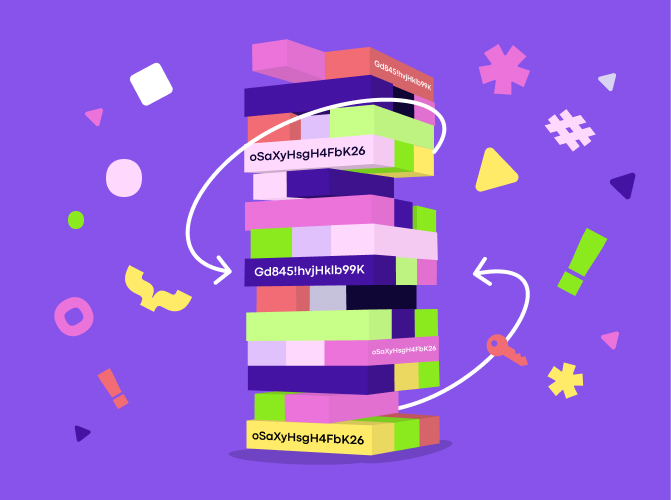
When it comes to cybersecurity, trust is a commodity scarcely afforded, and for good reason. Introducing zero trust architecture (ZTA) — a concept that’s as straightforward as it is stringent: “trust no one, verify everything.” While it may sound like a tagline from a spy thriller, it’s a real, actionable mantra for modern-day cybersecurity frameworks. At the heart of making this principle a reality is secrets management.
Imagine it as the choreography ensuring that the right credentials are in the right hands, at the right time for all the right reasons. This dance of authentication and authorization is crucial to keep the sinister hackers at bay.
Through the lens of this article, we’ll explore the relationship between secrets management and zero trust architecture, unraveling how the former plays a pivotal role in realizing the fortified security posture promised by the latter. But first, let’s set the stage.
Secrets management and ZTA: an overview
The crux of the ideology behind zero trust architecture is simple: assume threats could emanate from anywhere — even from within your cozy office spaces. This is a shift from the “trust but verify” philosophy, similar to leaving your doors unlocked but having a security camera — an approach somewhat reactive rather than proactive.
Now, what does this have to do with secrets management? Quite a lot, as it turns out. A secrets management platform is like the trusted custodian in this zero-trust concert, managing the keys to various doors within your organization — passwords, API keys, or other credentials. Its role is to ensure that only the right individuals or entities get the right keys, and only when necessary.
Every access request is like a visitor ringing your doorbell. The secrets management platform checks their ID, ensures they’re on the guest list, and only then allows them in. And much like a vigilant door supervisor, it keeps a keen eye on who’s coming in, who’s going out, and what they’re doing while they’re inside.
This concoction of caution and vigilance, facilitated by the secrets management platform, is instrumental in building and maintaining the integrity and security that a zero trust architecture demands. It’s not merely about opening doors but ensuring trust is earned and verified at every juncture.
As we transition into the next section, we’ll dissect how a secrets management platform interlinks with zero trust in human-to-machine and machine-to-machine interactions, forming a robust security fabric that is tough for malicious actors to break into.
How is secret management used with zero-trust?
In a zero trust architecture, every interaction, whether human-to-machine or machine-to-machine, starts with skepticism. It’s like the bouncer at an elite club, meticulously evaluating everyone before granting entry. The identification badge here is the ‘secret’, managed meticulously by secrets management systems. These secrets are the golden tickets, allowing entities to prove their identity and gain the required access. The tighter the secrets are managed, the stronger the zero trust architecture against potential threats.

Source: Unsplash
Human-to-machine access
In a zero trust environment, human-to-machine interactions are similar to a VIP entering a highly secure facility. In this case, the VIP is the user, and the secure facility is the system or service they aim to access. The process of granting access begins with a robust authentication mechanism, ensuring the user is who they claim to be. However, unlike traditional systems where authentication is a one-off event, zero trust demands continuous validation, a never-ending scrutiny like the security detail accompanying the VIP wherever they go. The meticulous management of secrets underpins the ‘never trust, always verify’ mantra of zero trust, ensuring that every access request is legitimate and within the defined policy parameters.
Machine-to-machine access
The machine-to-machine interactions within a zero-trust framework are a complex choreography of automated processes, each with a specific role and access rights. It’s a realm with no room for improvisation; every move is scripted and must adhere to strict security protocols.
The secrets management platform is the director of this choreography, ensuring each machine holds the correct credentials to interact with its counterparts and access the necessary resources. This extends to monitoring the behavior of machine interactions, ensuring they adhere to the established patterns, and flagging any anomalies for immediate investigation.

Source: Freepik
It’s worth mentioning that in a zero trust architecture, the monitoring and management of machine-to-machine interactions are continuous. Secrets management systems keep a vigilant eye on these interactions, ensuring they remain within the defined security boundaries, thus reinforcing the zero trust principles of ‘least privilege’ and ‘assume breach.’
Identity, Authentication, and Authorization
In the context of zero trust, the trio of Identity, Authentication, and Authorization form the cornerstone of securing both human-to-machine and machine-to-machine interactions. Let’s break it down.
Identity
In a zero trust architecture, identity is the primary key to distinguishing between different users and systems. When an entity, be it a human or machine, attempts to access a resource, the first question posed is, “Who are you?” This is where identity steps in, providing a unique identifier like a username or a machine ID.
Having a robust identity management system is crucial in a cloud-native environment, where resources are scattered across various services and platforms. Secrets management aids in securely storing and managing identity credentials, ensuring that they are available only to authorized entities, thus laying the foundation for a robust zero trust framework.
Authentication
Once the identity is established, the next step is to verify it. Authentication validates the claimed identity, just like the security guard checking your ID at the entrance. In this case, the system constantly verifies the entity’s identity throughout the access session, ensuring that it continues to be who it claims to be.

Source: Freepik
Here, secrets management becomes indispensable. It provides and validates the credentials used for authentication, ensuring that they remain secure and uncompromised, reducing the risk of unauthorized access due to credential leakage or misuse is significantly mitigated.
Authorization
Having crossed the identity and authentication checkpoints, the entity now faces the question, “What are you allowed to do?” Authorization is the process that defines the level of access and actions permitted to an entity.
Secrets management ensures that permissions adhere to the principle of least privilege, where entities are granted only the minimum levels of access or permissions needed to accomplish their tasks. This minimizes the potential damage in a breach.
How does zero trust security work with IAM and PAM?
The zero trust framework and secrets management form a formidable duo, but when integrated with Identity and Access Management (IAM) and Privileged Access Management (PAM), they create a holistic security paradigm. Let’s understand how these puzzle pieces fit together.
Identity and Access Management (IAM)
IAM involves the meticulous management of roles and access permissions allotted to each network user, along with the scenarios in which these privileges are either granted or withheld. Within a zero trust framework, IAM emerges as a crucial element, affirming that solely authorized individuals gain access to designated resources.
Privileged Access Management (PAM)
PAM serves as a specialized segment within IAM, primarily aimed at overseeing and controlling privileged access directed towards vital systems and data. It ensures that only authorized users or systems get privileged access to sensitive network parts.
Combining IAM, PAM, and secrets management within a zero trust framework creates a robust security architecture that significantly enhances the overall security posture. Suffice it to say that they are a well-coordinated team where each player knows their role, and they work together to keep the adversaries at bay.
Final thoughts
Synergy between zero trust architecture and proficient secrets management is critical for maintaining modern cybersecurity frameworks. As organizations adapt to a zero trust model, ensuring meticulous management of secrets is crucial for safeguarding both human-to-machine and machine-to-machine interactions. Here’s where Entro comes into the picture It offers the following:
- Comprehensive scanning: Broadens the scan beyond the codebase, encompassing CI/CD pipelines, collaboration tools, and cloud configurations.
- Contextual intelligence: Provides enriched metadata for every discovered secret, enabling effective remediation strategies.
- Automated mitigation: Delivers automated responses to stay ahead of potential threats, emphasizing real-time action.
- Compliance assurance: Facilitates adherence to industry regulations like PCI-DSS and HIPAA, integrating compliance within your secrets management strategy.
- Dark web vigilance: Ensures your secrets remain protected, both internally and externally, through dark web scanning.
Entro embodies a future where secrets management is an asset, not an afterthought. Its holistic approach addresses the complexities of today’s cybersecurity demands.
Are you ready to elevate your organization’s secrets security within a zero trust architecture? Click here to discover the unparalleled benefits of Entro’s comprehensive secrets security solution today.